Why Annual Engagement Surveys Fail Teams
Annual engagement surveys arrive too late, run too long, and protect anonymity in name only. Here is why the once a year ritual fails teams, and what a faster, genuinely anonymous rhythm looks like.
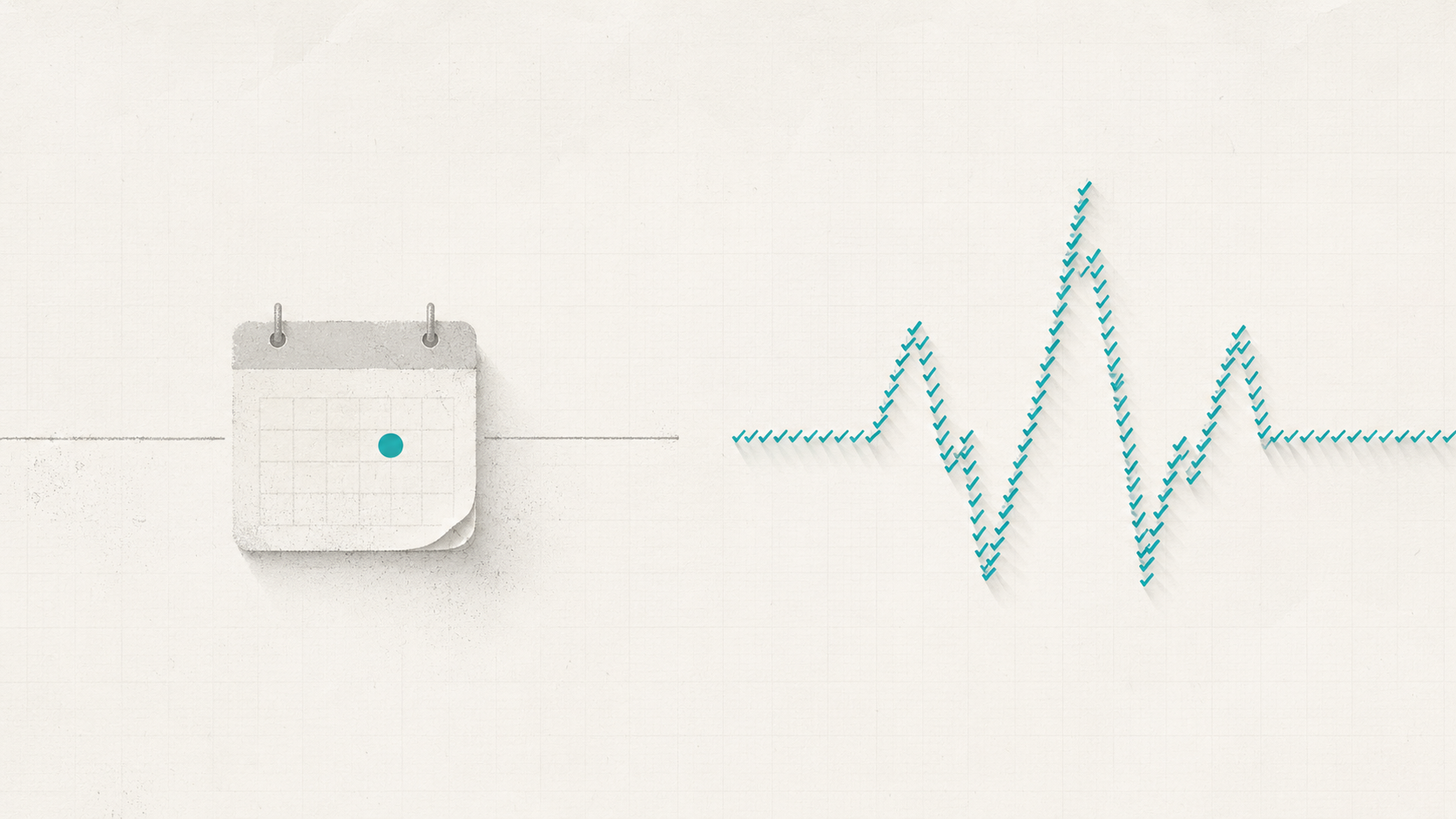
Once a year, a link lands in everyone's inbox. Forty questions, a progress bar that barely moves, and a promise that "your feedback matters." Three months later a slide deck appears with a number on it, 72, up two points, and nothing about the day to day actually changes.
If that cycle feels familiar, it is not because your team is disengaged. It is because the annual engagement survey is the wrong instrument for the job. It was built to produce a report, not to help a team. Here is where it breaks down.
1. The data is stale before you read it
A year is a long time inside a team. People join and leave, a reorg lands, a launch slips, a manager changes. By the time results are tallied, normalized, and presented, you are looking at a photograph of a team that no longer exists.
Engagement is not an annual constant you measure once and bank. It moves week to week with workload, clarity, and momentum. Sampling it once a year is like checking a patient's pulse every twelve months and calling it monitoring.
2. It runs too long, so people stop being honest
Forty plus questions is a tax, and people pay it the cheapest way they can. They straight-line the same answer down the column, skip the free-text boxes, or quietly never finish. Survey fatigue does not just lower your response rate. It corrupts the responses you do get. The longer the form, the less each answer means.
The irony is that the most useful signal is usually the part people skip: the two sentences in the comment box that tell you why the score moved.
3. "Anonymous" usually is not
Most annual surveys promise anonymity and then quietly undercut it. Results get sliced by department, tenure, and location until a "team" segment is three people, and everyone knows it. Free-text comments sit next to metadata that can re-identify the author. People can feel this, even when they cannot prove it, so they round their answers toward what is safe.
Candour is the entire point of asking. The moment people suspect a comment can be traced back to them, you stop collecting truth and start collecting diplomacy.
4. Nothing closes the loop
Annual cadence makes follow through almost impossible. A theme surfaces in Q1's survey, an action item gets written down, and the next chance to ask "did that help?" is next year. By then the context is gone and so is the trust. People learn that filling out the survey changes nothing, so next time they invest even less.
Feedback only compounds when there is a loop. You ask, you act, and you ask again soon enough that people can see the connection.
What a better rhythm looks like
The fix is not a longer survey or a fancier dashboard. It is a different shape entirely.
- Short and recurring, not long and annual. A few well chosen questions on a cadence that fits the team, so you are watching a trend line rather than a yearly snapshot.
- Genuinely anonymous, by design. Never showing who said what, and never reporting on a group small enough to out someone. Anonymity that is enforced, not just promised.
- Built to close the loop. Each round can pick up the last round's top theme and ask whether it improved, so people see that speaking up moves something.
- Trends and themes, not a scoreboard. The output a manager needs is what is rising, what is slipping, and what people keep mentioning, not a single vanity number.
This is exactly what we are building Pulsings to do. Anonymous, recurring team pulses that take under five minutes, protect candour by design, and turn feedback into a trend you can act on, without ever revealing who said what.
The annual survey asks once and reports late. A pulse asks often, protects the people answering, and closes the loop while it still matters.
Want feedback that actually moves something? See how Pulsings works »